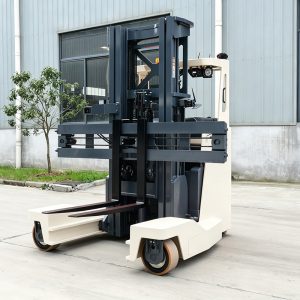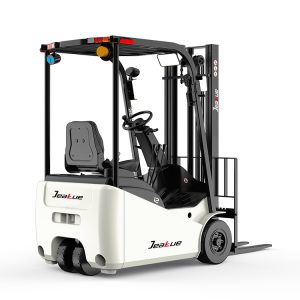
When working in confined indoor environments—from narrow warehouse aisles to compact office renovation sites, or even tightly packed retail spaces—traditional aerial work platforms often fall short. Oversized scissor lifts struggle to maneuver around corners, while boom lifts leave unsightly scuffs on polished floors and can’t fit through standard doorways. This is where a well-chosen vertical mast lift becomes an indispensable tool, balancing compact footprint, precise lifting power, and uncompromising safety to turn once-impossible high-access tasks into straightforward operations.
Core Performance Metrics to Prioritize for Indoor Use
The first non-negotiable factor for tight indoor spaces is the machine’s overall footprint. Unlike bulky aerial equipment, premium compact vertical mast lifts are engineered with a zero-turn radius design, with many models measuring less than 0.8 meters in width—narrow enough to glide through standard 0.9-meter interior doorframes without needing disassembly. For facilities with weight-restricted floors, such as modern office buildings with raised access floors or historic properties with delicate flooring, it is critical to select a model with a low ground pressure rating; high-quality electric mast lifts distribute their weight evenly across non-marking rubber tires, exerting less than 150 kPa of pressure, which eliminates the risk of cracks, dents, or permanent tire marks on hardwood, tile, or vinyl surfaces.
Lifting height and platform capacity must also align with the specific demands of indoor tasks. For routine maintenance like changing ceiling light bulbs or adjusting HVAC vents in low-rise commercial buildings, a 6 to 8-meter mast lift is more than sufficient, while warehouse inventory management or high-wall painting projects may require models that reach 10 to 12 meters. It is a common mistake to over-specify height, as an unnecessarily tall mast adds extra weight and bulk that makes navigation far more difficult in cramped spaces. Most compact vertical mast lifts offer a platform capacity between 120 and 200 kilograms, which easily supports one operator plus a set of tools and small materials, avoiding the unnecessary excess capacity that drives up both cost and size.
Key Features That Make a Difference in Confined Areas
Modern vertical mast lifts designed for indoor use come packed with intelligent features tailored to tight spaces. Electric-powered models, rather than those with internal combustion engines, produce zero exhaust emissions and operate at a noise level below 60 decibels—quiet enough to use during regular business hours in occupied offices, hospitals, or retail stores without disturbing staff, customers, or patients. Many top-tier units also include a fold-down guardrail system, which allows the entire machine to pass through low overhead doorways without requiring operators to manually remove and reattach safety rails, a feature that saves significant time during multi-room projects.
Advanced safety systems are non-negotiable for indoor operation. Look for models fitted with pothole protection mechanisms that automatically extend to stabilize the machine if it encounters small gaps or uneven floor edges, as well as tilt sensors that trigger an audible alert and prevent the lift from rising if the platform is positioned on a slope exceeding 1.5 degrees. For spaces with extremely low overhead clearance, some manufacturers offer a platform load-sensing system that limits maximum lifting height when the total weight on the platform approaches the rated capacity, preventing accidental collisions with ceiling beams, sprinkler systems, or hanging light fixtures.
Matching the Lift to Your Specific Application
Different indoor tasks demand different configurations of vertical mast lifts. For facility maintenance teams that move between multiple small rooms and narrow corridors on a daily basis, a lightweight, push-around manual mast lift is the most cost-effective choice; these units require no battery power for propulsion, can be easily pushed into position by one person, and are ideal for quick, short-duration tasks. For longer renovation or construction projects where operators need to move between work zones while elevated, a self-propelled electric mast lift is far more efficient, allowing the user to drive the machine from the platform while staying at working height, eliminating the need to climb up and down repeatedly.
In spaces with extremely limited overhead room, such as under low-hanging mezzanines or in basement utility rooms, a telescopic mast lift with a reduced-height platform option is the best solution. Unlike traditional scissor lifts that require significant vertical clearance to unfold their arms, these mast lifts extend in a straight, compact line, making it possible to reach work points that are just a few meters above the ground without risking contact with overhead obstructions.
Long-Term Value and Practical Considerations
Beyond the initial purchase price, factors like ease of maintenance and parts availability play a huge role in the total cost of ownership. The best indoor vertical mast lifts use brushless electric motors that require almost no routine maintenance, with battery life that supports 8 to 10 hours of continuous operation on a single charge. For teams that only need the equipment for occasional short projects, many rental providers offer flexible hourly or daily rates, but for facilities that require high-access support on a weekly basis, owning a compact mast lift delivers a return on investment far faster than relying on ladders, which present far higher fall risks for operators.
In the end, choosing the right vertical mast lift for tight indoor spaces is not just about picking the smallest or cheapest model available—it is about finding a tool that fits perfectly within the unique constraints of your work environment, keeps operators safe, and boosts productivity without causing damage to the property. By prioritizing compact dimensions, low ground pressure, zero-emission operation, and application-specific features, you can turn even the most cramped, hard-to-reach indoor work zones into safe, easy-to-manage access points. This article breaks down the key considerations for selecting vertical mast lifts for tight indoor spaces, covering performance metrics, practical features, application matching and long-term value. If you need to adjust the word count, add specific brand cases or modify the focus for a certain industry, you can let me know.