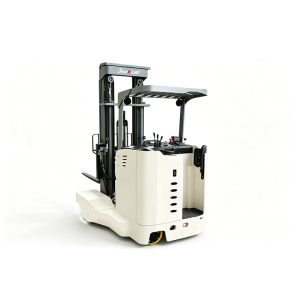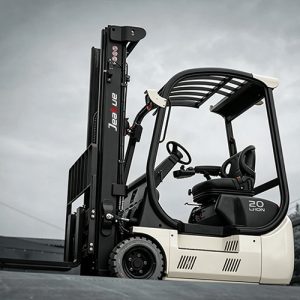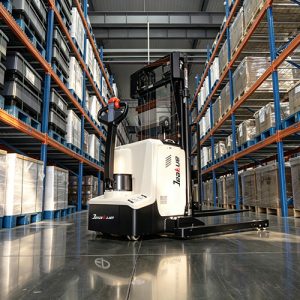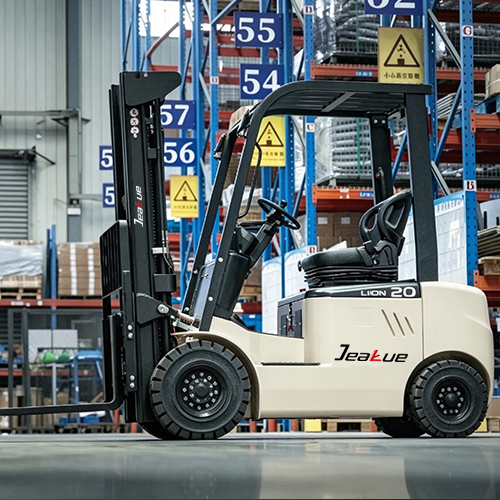
The modern warehouse and manufacturing floor are undergoing a quiet revolution. For decades, the backbone of material movement has been the traditional fleet: human-driven forklifts, pallet jacks, and tow tractors. These workhorses are reliable, versatile, and deeply embedded in operational workflows.
However, the rise of Autonomous Mobile Robots (AMRs) has introduced a new paradigm. Rather than viewing this as a “new versus old” battle, the most innovative logistics operators are pursuing a more pragmatic strategy: integration. They are discovering that the “hybrid fleet”—where AMRs work alongside traditional vehicles—offers the best of both worlds.
Successfully integrating AMR technology with an existing traditional fleet is not simply about buying new robots and setting them loose. It requires a strategic overhaul of workflows, infrastructure, and human-robot interaction. Here is a guide to navigating that integration.
1. The “Why”: Complement, Don’t Replace
The first rule of integration is identifying the specific strengths of each asset.
-
AMRs excel at: Repetitive, predictable hauling (e.g., line-side feeding, long-distance transport), operating in narrow aisles, and working overnight shifts without fatigue. They are the ultimate “mules” for point-to-point transport.
-
Traditional Vehicles excel at: Complex handling (e.g., maneuvering around irregular pallets), high-velocity unloading of trucks, and heavy-lifting capacity (over 5,000 lbs). The human operator provides situational awareness that current AMR software cannot replicate.
The Strategy: Deploy AMRs to absorb the “grunt work” transport tasks. This frees up your skilled forklift operators to focus on high-value tasks like loading trailers, stacking high-bay racks, and handling exception cases that require human judgment.
2. The Interoperability Challenge (Digital Integration)
The physical robot is only half the story. The “brain” of the integration lies in the software.
In a fully integrated fleet, the traditional forklifts and the AMRs must share the same operational data. This means connecting your Warehouse Management System (WMS) or Manufacturing Execution System (MES) to a unified Fleet Management Software that governs both types of machines.
-
Common Database: When an AMR delivers a pallet to a drop zone, the WMS must update instantly. That same alert triggers a notification to a forklift driver to move that pallet to a high-bay rack.
-
Task Interleaving: The system should be able to prioritize. If a truck arrives late, the system can redirect the AMR to another task and summon the human-driven forklift to handle the urgent offload.
Without this digital bridge, the integration is merely “co-existence”—and co-existence leads to bottlenecks.
3. The Physical Interface (Infrastructure)
Putting a slow-moving AMR next to a fast-moving forklift requires specific physical design.
-
Designated Lanes: Create “AMR corridors” where the robots travel unimpeded. This reduces the risk of “deadlocks” where a robot stops because a forklift is blocking its path. Conversely, ensure AMRs do not cross into the high-speed “loading zones” during peak truck turnaround times.
-
Standardized Interfaces: The integration hinges on the hand-off points. Ensure that the height of AMR top decks matches the height of the traditional fleet’s forks or rollers. If a human driver has to bend over excessively or adjust a lift significantly to pick up a load from an AMR, ergonomic efficiency is lost.
-
Charging Infrastructure: Plan for battery swapping or automatic charging stations that do not interfere with the traffic flow of the traditional forklifts.
4. Safety: The Human-Robot Dynamic
Safety is the non-negotiable pillar of integration. Traditional forklifts often rely on audible alarms and flashing lights. AMRs use LiDAR and 3D cameras.
The integration requires a layered safety approach:
-
Zone Control: Use proximity sensors to create “geofences.” If a forklift enters a zone where an AMR is operating, both vehicles should slow down automatically.
-
Clear Visual Cues: You cannot rely on the AMR’s algorithm to stop; you must rely on the human’s vision. Paint the floor to indicate AMR priority zones and high-traffic intersections. Humans are excellent at pattern recognition; give them a pattern to follow.
-
Tethering: For complex tasks, consider “following mode,” where an AMR acts as a trailer for a human driver. The human leads, and the robot follows autonomously, eliminating the need for a second human driver.
5. The Human Factor (Change Management)
Arguably the biggest hurdle is cultural. Experienced forklift operators often view AMRs with skepticism—fearing replacement or disruption to their daily rhythm.
The Strategy: Frame the AMR as a “colleague,” not a “replacement.” Upskill your operators to become “Fleet Coordinators.”
Instead of driving a forklift for 8 hours, an operator might supervise a zone where three AMRs are running, only intervening when an AMR encounters an error or handling a complex load. This elevates the role from manual labor to technical oversight. Training should include:
-
How to manually override or clear an AMR jam.
-
How to interpret the Fleet Management Dashboard.
-
How to “teach” a new route to the AMR system via mapping tools.
6. The Scalability Roadmap
Don’t attempt a “Big Bang” integration. Start with a specific, isolated workflow—such as transporting empty pallets from the receiving dock to the storage area.
Measure the KPIs:
-
Task Completion Time: Has the travel time for that specific route decreased?
-
Downtime: Are the AMRs causing delays for the forklifts?
-
Energy Costs: How does the battery cost of the AMR compare to the diesel or propane cost of the forklift?
Once you prove the ROI in that small zone, you can expand the AMR fleet incrementally. This allows your traditional fleet to shrink naturally through attrition (not layoffs), avoiding the cost of a sudden massive capital expenditure.
Conclusion
The future of logistics is not a warehouse devoid of humans nor a facility restricted to legacy equipment. The “smart warehouse” is one where AMRs handle the repetitive mileage, while human-driven forklifts handle the nuance, complexity, and high-load tasks.
By focusing on digital interoperability, physical hand-off points, and a human-centric training program, companies can build a “plug-and-play” hybrid fleet. This integration doesn’t just move materials faster; it makes your operation more resilient, allowing you to flex between automated and manual modes depending on the volatility of the supply chain. The goal is not to replace the traditional fleet, but to supercharge it.