In the relentless pursuit of supply chain efficiency, the adage “go high or go home” has never been more pertinent. As e-commerce demands accelerate and urban real estate prices skyrocket, the traditional sprawling warehouse is becoming a financial liability. The solution lies not in expanding outward, but in maximizing upward. Optimizing vertical space is no longer just a logistical advantage; it is a necessity for survival.
Modern warehouse rack design has evolved far beyond the simple selective pallet rack. Today, engineering ingenuity is transforming cubic volume into accessible, high-density storage. Here is a look at the cutting-edge rack designs revolutionizing how we store and retrieve goods.
1. The Rise of the “Goods-to-Person” Model
Perhaps the most significant paradigm shift in vertical storage is the move away from “person-to-goods.” Automated Storage and Retrieval Systems (AS/RS) utilizing Shuttle Racks are leading this charge. These systems use motorized shuttles that travel within the rack structure to retrieve deep-stored pallets.
Instead of building a building 40 feet high with traditional forklifts struggling to reach the top, shuttle systems utilize the entire height with precision. Because the shuttles are narrow and guided by rails, they eliminate the need for wide aisles for forklift turning radiuses. This design allows warehouses to pack more pallets into the same footprint while keeping workers safely on the ground.
2. The “Double-Deep” and “Drive-In” Evolution
For warehouses dealing with high-volume, homogenous inventory (think bulk commodities or seasonal items), Drive-In Racks and Double-Deep Racks are undergoing a high-tech revival.
-
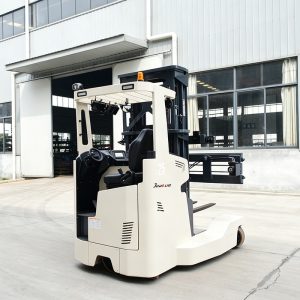
Double-Deep Racks allow storage of pallets two positions deep, accessed by specialized reach trucks. This reduces the number of aisles required by nearly 50%.
-
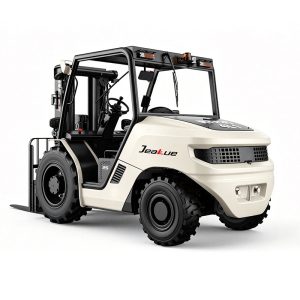
Drive-In Racks allow forklifts to drive directly into the rack structure to deposit or retrieve pallets from the deepest position.
However, the innovation lies in their combination with satellite carts. These battery-powered carts glide under the pallet, allowing for automated loading and retrieval without the forklift needing to penetrate the structure fully. This maximizes density while reducing the risk of structural damage caused by operator error.
3. Multi-Level Mezzanine and Pick Modules
Not all vertical storage is about pallets. For e-commerce fulfillment centers dealing with “each” or “piece” picking, Multi-Level Mezzanine Rack Systems are the gold standard. These are essentially steel-framed buildings within a building.
Modern mezzanines are not just static shelving; they are modular platforms that integrate conveyor belts, slide-out bins, and even “pick-to-light” technology. By utilizing the vertical space from the floor to the ceiling, operators can create multiple picking levels. This effectively triples the usable square footage of the warehouse without moving a single exterior wall. The latest designs feature flexible modular components that can be easily reconfigured as inventory profiles change.
4. The Micro-Fulfillment Revolution: Vertical Lift Modules (VLMs)
When the goal is to maximize vertical space in a minimal footprint, Vertical Lift Modules (VLMs) are unbeatable. These are fully enclosed systems that look like massive filing cabinets but function as automated storage silos.
A VLM consists of two columns of trays that rotate vertically to bring the required item to a central picking window. By reducing the warehouse footprint to the size of a large elevator shaft, VLMs can utilize ceiling heights of up to 80 feet. They offer 100% accurate inventory tracking and eliminate the need for interior lighting and dust control, reducing energy costs. For industries requiring high security (like pharmaceuticals or luxury goods), VLMs offer a secure, controlled vault.
5. Robotic Integration and “Mixed-Handling”
The most significant trend in rack design is the transition to robotic-ready racks. Modern racks are being designed with closer tolerances and smoother floor surfaces to accommodate Autonomous Mobile Robots (AMRs).
Innovative designs now feature “mixed-handling” capacity. This means the same rack structure can support heavy pallets on the lower levels while utilizing lightweight cartons and totes on the upper levels. Advanced rack designs incorporate integrated “pick-stations” where robots align with the rack face to deposit or retrieve items, eliminating the need for human travel time and maximizing the vertical dimension as a continuous flow path.
The Future: AI and Predictive Configuration
The next wave of innovation is not just in steel but in software. “Dynamic Racking” is on the horizon, where AI algorithms analyze SKU velocity (how fast items move). The racking itself is becoming modular enough that it can be reconfigured based on heat maps. Fast-moving items are stored at “ergonomic heights” (knee to shoulder) in the lower vertical zones, while slow-moving dead stock is relegated to the high vertical zones, accessed only by automated cranes.
In conclusion, the modern warehouse is a vertical ecosystem. By adopting innovative rack designs—from shuttle systems and VLMs to robotic-ready mezzanines—businesses can turn overhead air into profitable inventory space. The ceiling is no longer the limit; it is the new frontier for operational efficiency.