For decades, heavy-duty industries—from port logistics and mining to data centers and utility-scale energy storage—relied on a familiar triad of power sources: diesel generators, lead-acid batteries, and direct grid connections. Each came with baggage. Diesel meant emissions, noise, and volatile fuel costs. Lead-acid offered reliability but demanded constant maintenance, lengthy charging cycles, and massive physical footprints. Grid power, while clean at point of use, often lacked the flexibility to support remote or rapidly scaling operations.
Enter modern lithium battery technology. No longer confined to smartphones and electric vehicles, lithium-ion systems are now penetrating the core of high-capacity operations, rewriting the rules of energy density, discharge depth, and lifecycle economics. This shift is not incremental—it is structural.
The Energy Density Advantage: Doing More with Less Floor Space
The most immediate transformation lithium brings to high-capacity operations is energy density. A typical lead-acid battery might deliver 30–40 watt-hours per kilogram. A lithium iron phosphate (LFP) cell, now common in industrial settings, easily achieves 150–200 Wh/kg—and in some high-performance chemistries, over 250 Wh/kg.
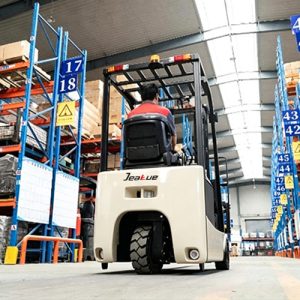
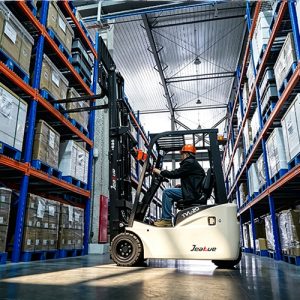
For a container crane at a busy port, that means replacing three tons of lead-acid batteries with one ton of lithium, freeing up critical counterweight space while doubling usable runtime. For an automated guided vehicle (AGV) in a warehouse, it means continuous three-shift operation with opportunistic charging during brief load-unload cycles rather than dedicated eight-hour recharge breaks.
This density cascades into logistics savings, structural reinforcement reduction, and the ability to electrify equipment that was previously considered impossible to run on batteries—such as 100-ton mining haul trucks or rail-mounted gantry cranes.
100% Depth of Discharge: Unlocking True Usable Capacity
Lead-acid batteries degrade rapidly if discharged below 50% of their rated capacity. To preserve lifespan, operators effectively halve their installed capacity. Lithium batteries, in contrast, routinely allow 80–95% depth of discharge without significant degradation. Some industrial formulations permit 100% discharge with proper battery management systems (BMS) in place.
The real-world implication is profound. A 100 kWh lead-acid bank offers about 50 kWh of usable energy. A similarly sized 100 kWh lithium bank offers 90–95 kWh. This 1.8x effective capacity gain often means fewer battery swaps, smaller battery rooms, and extended autonomous operation windows—critical for remote telecom towers, off-grid mining sites, or overnight electric bus depots.
Cycle Life: The Long-Term Economic Game Changer
High-capacity operations measure ROI in years and tens of thousands of cycles. Here, lithium dominates. Lead-acid typically lasts 500–1,500 cycles at 50% DoD. Lithium LFP cells routinely achieve 4,000–10,000 cycles at 80% DoD. For a daily deep-cycle operation, that translates to 10–15 years of service versus 2–3 years.
While lithium’s upfront capital cost remains higher (typically 2–3x lead-acid), the total cost of ownership flips dramatically after the first replacement cycle. Reduced labor for watering, equalizing, and cleaning terminals; lower ventilation costs (no hydrogen off-gassing in most lithium chemistries); and avoided downtime for battery changes add further savings.
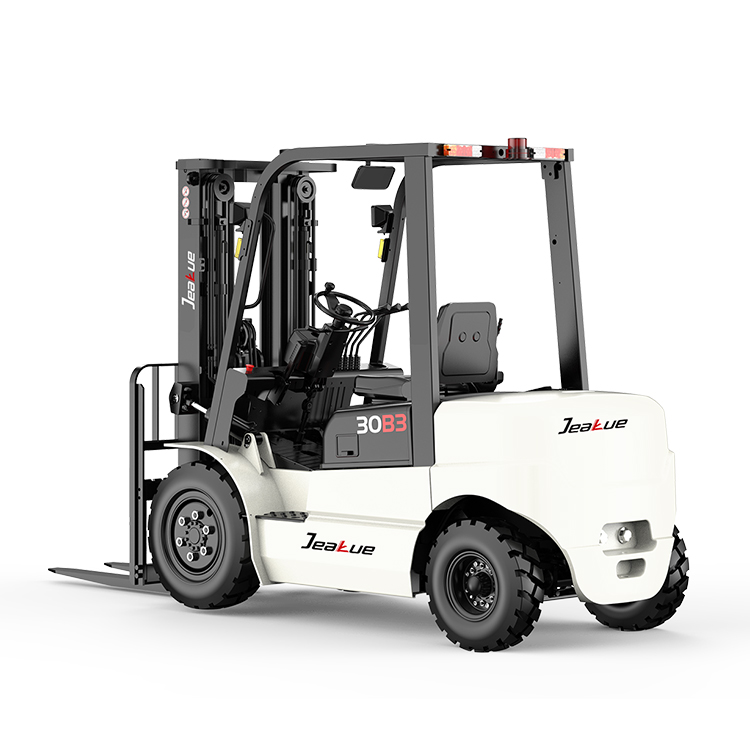
Case in point: a European logistics hub that converted its forklift fleet to lithium reported 27% lower energy costs per pallet moved and a 62% reduction in fleet maintenance hours within 18 months.
Fast Charging and Opportunity Charging: Redefining Workflows
One of lithium’s most operationally disruptive features is its ability to accept high charge currents without damage, especially when paired with active thermal management. A lead-acid battery might require 8 hours of charging followed by 8 hours of cooling. A lithium battery can often recharge from 20% to 80% in 30–60 minutes, and from 20% to 100% in 2 hours.
This enables opportunity charging—short bursts of high-power charging during natural breaks in operations (lunch hours, shift changes, conveyor jams). Warehouses are redesigning layouts to embed charging zones directly into busy aisles. Ports are deploying wireless inductive charging pads at quayside waiting zones. The result: batteries no longer dictate the rhythm of work. Operations run continuously, with energy replenished in the margins.
Safety and Monitoring: The Silent Enabler
High-capacity operations cannot tolerate fire risks or unexpected shutdowns. Modern lithium systems integrate sophisticated battery management systems that monitor temperature, voltage, current, and state of health in real time. These BMS units communicate with central control systems—via CAN bus, Modbus, or IoT platforms—to predict failures, balance cells, and disconnect under fault conditions.
Thermal runaway, a widely publicized early issue with cobalt-based lithium chemistries, is largely mitigated in industrial settings by switching to LFP or lithium titanate (LTO) chemistries, which exhibit far higher thermal stability. Major industrial insurers now rate well-designed lithium systems as no higher risk than lead-acid, and often lower due to proactive monitoring.
The Grid and Renewable Integration Angle
Beyond mobile equipment, lithium is reshaping stationary high-capacity operations. Data centers, which once relied on spinning UPS flywheels or valve-regulated lead-acid (VRLA) strings, are converting to lithium-based uninterruptible power supplies. The benefits are twofold: faster response times (microseconds vs milliseconds) and the ability to perform grid peak shaving—discharging stored energy during expensive demand periods and recharging during low-cost hours.
Likewise, microgrids for mining operations or island communities now pair solar arrays with megawatt-scale lithium storage, displacing diesel generators for 80–90% of the operating day. One Australian iron ore mine cut diesel consumption by 3.7 million liters annually after deploying a 12 MWh lithium battery system alongside its existing solar farm.
Challenges That Remain—And Why They’re Fading
No technology is perfect. Lithium batteries still face higher first costs, require temperature control in extreme environments (though LTO performs well from -40°C to +60°C), and pose end-of-life recycling challenges. However, second-life applications (retired EV batteries repurposed for stationary storage) and improving hydrometallurgical recycling (achieving 95% material recovery) are rapidly closing the loop.
Manufacturing scale continues to drive costs down. Lithium battery pack prices fell by 89% from 2010 to 2022, and another 20–30% reduction is expected by the end of this decade. At that point, even upfront comparisons will favor lithium for most high-capacity applications.
Conclusion: A New Baseline for Heavy-Duty Power
Lithium battery technology is not merely an upgrade—it is a paradigm shift for high-capacity operations. By delivering higher usable energy per kilogram, faster recharging, radically longer cycle life, and intelligent monitoring, it enables operational models that were previously impossible or uneconomical.
The message for operations managers and CTOs is clear: evaluate your energy flows not by rated capacity alone, but by usable energy per shift, total cost per cycle, and the flexibility to charge without stopping work. Where lead-acid once constrained, lithium now liberates. And in the high-stakes world of high-capacity logistics, mining, and grid management, that liberation is becoming the new baseline.