As electrification sweeps through warehouses, manufacturers double down on high-torque diesel innovations for the world’s toughest job sites.
COLUMBUS, Ind. – In an era where sustainability regulations are tightening and electric trucks dominate 70% of European sales, a different kind of industrial revolution is still roaring loudly outdoors. The diesel forklift, long considered the “heavyweight champion” of the logistics world, is proving that reports of its imminent demise have been greatly exaggerated.
While lithium-ion batteries are taking over climate-controlled warehouses, the internal combustion (IC) engine is receiving a significant technology upgrade for construction sites, ports, and lumberyards. Driven by a projected global market value of over $11 billion by 2032 , major manufacturers like Toyota, Hyundai, and Bobcat are launching new diesel series designed to handle what electricity cannot yet manage sustainably: continuous heavy loads on uneven terrain.
The “Core” of Outdoor Strength
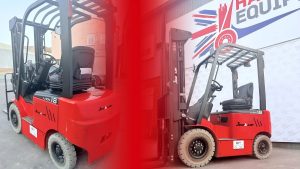
Toyota Material Handling recently took a significant step to solidify its dominance in this sector with the launch of the Core Diesel Pneumatic Forklift series.
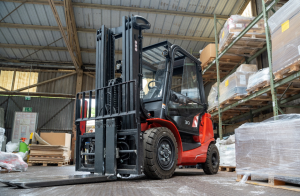
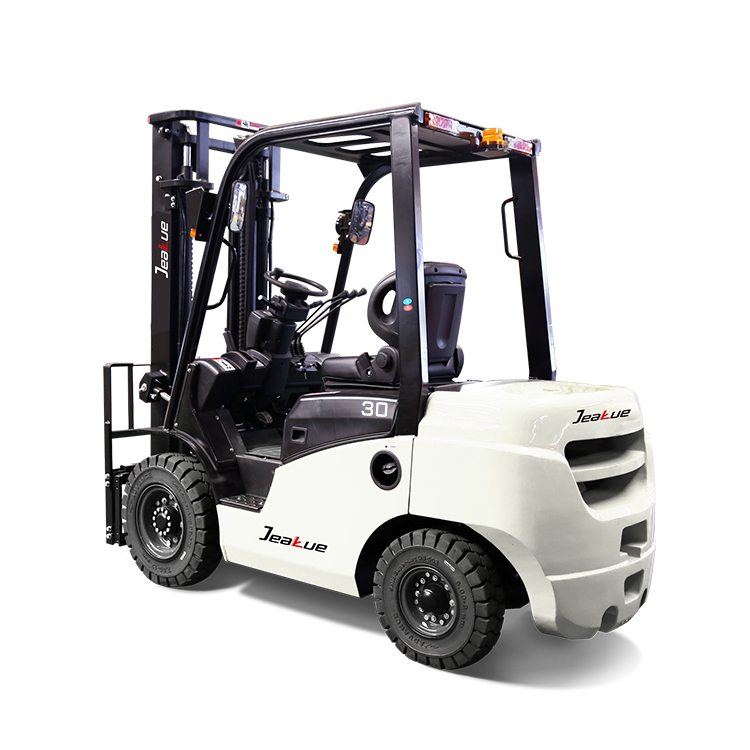
Unlike the silent three-wheelers designed for smooth concrete, Toyota’s new offering focuses entirely on “dependability” in the muck. Featuring rugged pneumatic tires, the series is engineered for applications ranging from port operations to building material storage.
“Built to perform in tough, outdoor applications with Toyota’s legendary quality, this forklift delivers the strength and durability operators depend on,” said Cesar Jimenez, VP of Regulatory Affairs & Product Planning for Toyota Material Handling .
The Core series focuses on low-end torque—the brute force needed to start a full load moving up a steep incline or across soft ground. To protect the operator during these high-stakes maneuvers, the forklift includes Toyota’s System of Active Stability™ to prevent tip-overs .
The Tech Upgrade: Telematics in the Driver’s Seat
The modern diesel forklift bears little resemblance to the smoky machines of the past. As noted in industry analyses for 2026, connectivity is becoming standard across all fuel types. Toyota’s new models come standard with MyInsights® telematics, allowing fleet managers to track performance and schedule preventative maintenance on diesel engines that often run 24/7 .
Even traditional engine manufacturers are embracing the digital shift. Hyundai’s new 7-series diesel trucks, for example, feature water-resistant dash displays that monitor 17 items—from fuel levels to air filter restrictions—alerting operators to potential engine damage before it happens .
“We’re seeing a convergence,” one market report notes, describing a shift toward “smart, energy-efficient, and automated forklifts.” For diesel, this means AI-assisted route planning and predictive analytics that tell a manager exactly when a truck needs servicing, eliminating the guesswork of heavy industrial maintenance .
Power vs. Policy: The Heavy-Duty Dilemma
Despite the push for net-zero strategies, data suggests that diesel remains irreplaceable in specific niches. The global market for heavy-duty warehouse forklifts (often diesel-powered) is expected to grow from 5.5billionto8.04 billion by 2032, driven by ports, steel yards, and manufacturing plants .
Bobcat recently demonstrated this dual reality. While aggressively expanding its electric lithium-ion range (BNT series) for light duty, the company simultaneously launched its largest diesel forklifts to date—the DV180S-9 and DV250S-9. With lifting capacities of 18 and 25 tonnes respectively, these machines are designed for heavy industrial environments where battery recharging is not a logistical option .
The Future of Diesel
Industry analysts QYResearch note that while the long-term trend points toward a decline in diesel due to emissions regulations, the immediate future is resilient. In regions with weak power grids and for applications requiring “rapid refueling” rather than lengthy charging cycles, the diesel forklift remains the king of the yard .
For now, the material handling sector is settling into a “horses for courses” approach. The warehouse of 2026 belongs to electric lithium-ion. But the construction site, the port, and the steel yard? That territory still belongs to diesel.