In heavy-duty material handling, diesel has long been the default choice—especially for high-capacity applications. But as fuel prices rise and maintenance costs increase, many businesses are starting to reconsider.
A recent project with a UK-based steel warehouse operator shows how switching to electric, combined with energy storage, can offer a practical and cost-effective alternative.
The starting point: a typical heavy-duty operation
The customer operates a steel warehouse, handling heavy loads on a daily basis. Their workflow is relatively straightforward: around four hours of operation per day, focused on moving large and heavy materials within the facility.
At the center of this operation was a 16-ton diesel forklift, the only truck capable of handling their heaviest loads.
While reliable, the setup came with growing drawbacks.
Rising costs and inefficiencies
Over time, the customer began to feel the impact of:
- Increasing diesel fuel costs
- High servicing and maintenance expenses
- Overall rising operational costs
Like many businesses in similar situations, they were not necessarily looking for a radical change—but the need to reduce costs was becoming more pressing.
A proactive solution from the dealer
Rather than simply replacing like-for-like, PHL identified an opportunity to introduce a more efficient solution.
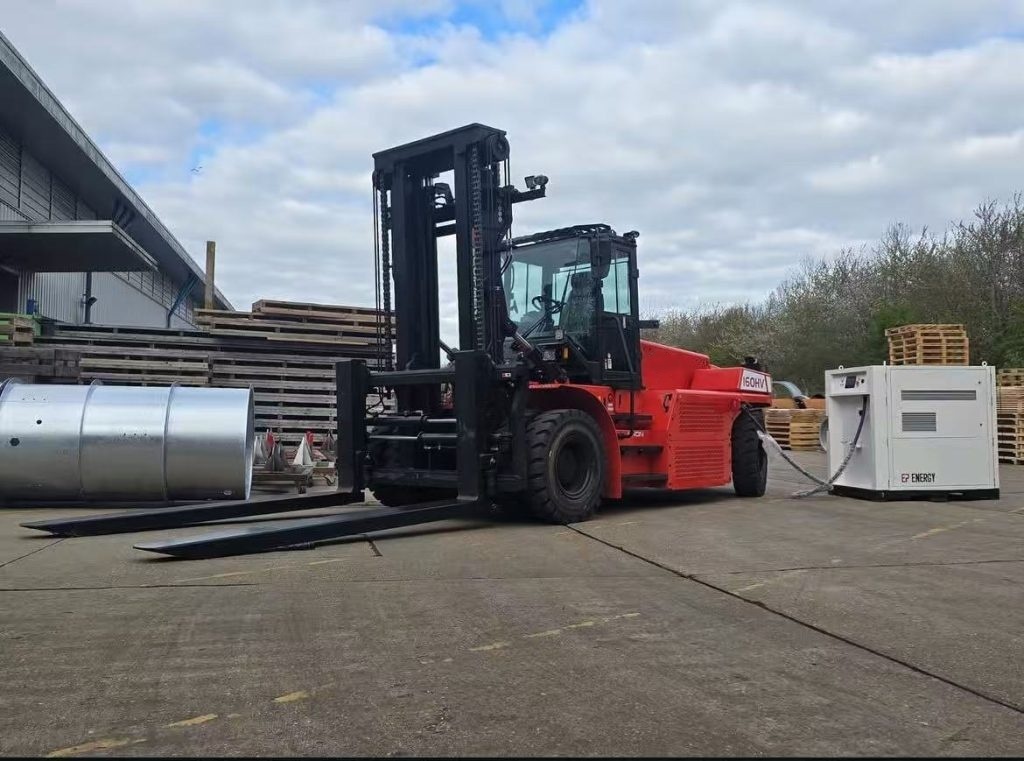
The customer transitioned to an JK EFL1603-HV 16t High Voltage Electric Forklift, supported by a 93 kWh battery energy storage system.
What makes this setup particularly interesting is its flexibility.
The battery storage system can:
- Charge from both grid and solar energy
- Deliver energy quickly to forklifts and even other equipment such as electric vehicles
- Support more efficient energy usage over time
At the moment, the system is connected to the grid, with the option to integrate solar energy in the future.

A smooth transition to electric
One of the key advantages in this case was the speed of implementation.
The truck was available immediately from PHL stock, allowing the customer to transition without delays or operational disruption.
The electric forklift quickly took over as the primary heavy-duty machine, seamlessly replacing the diesel unit in daily operations.
Immediate impact: lower costs, positive feedback
Even at an early stage, the benefits are already clear.
By switching from diesel to electric, the customer is seeing:
- Significant reductions in running costs, particularly due to the elimination of fuel expenses
- Lower maintenance requirements, compared to the previous diesel truck
- A more efficient overall cost structure
Just as important, the feedback from the customer has been very positive—they are already “loving it”, according to the dealer.
More than just a truck: enabling smarter energy use
Beyond the forklift itself, the addition of battery storage introduces new possibilities.
Even though the system is currently grid-connected, it is already enabling:
- Greater flexibility in energy usage
- A foundation for future optimization
- The potential to integrate renewable energy, such as solar
This means the solution is not only addressing current costs, but also preparing the operation for future energy strategies.
Creating value beyond the initial request
An important aspect of this project is that the customer did not explicitly request this type of solution.
Instead, PHL took a proactive approach, identifying an opportunity to improve the customer’s operations and reduce costs.
The result is a solution that delivers immediate benefits, while also opening the door to further improvements over time.
Looking ahead
While it is still early days, the transition to electric has already proven to be a positive step.
As the system evolves—potentially with the addition of solar energy or further electrification—the customer will be in a strong position to continue optimizing both costs and operations.

Conclusion
This project highlights a broader shift in heavy-duty material handling.
Even in applications traditionally dominated by diesel, electric solutions combined with energy storage are becoming not only viable, but advantageous.
For operations with predictable usage patterns—like this steel warehouse—the opportunity to reduce costs and increase efficiency is clear.