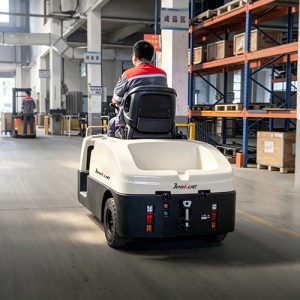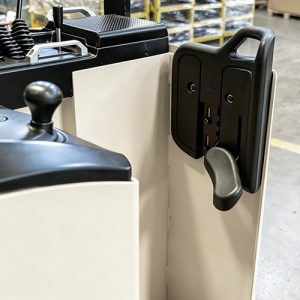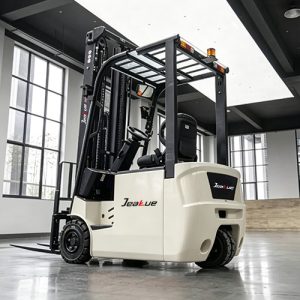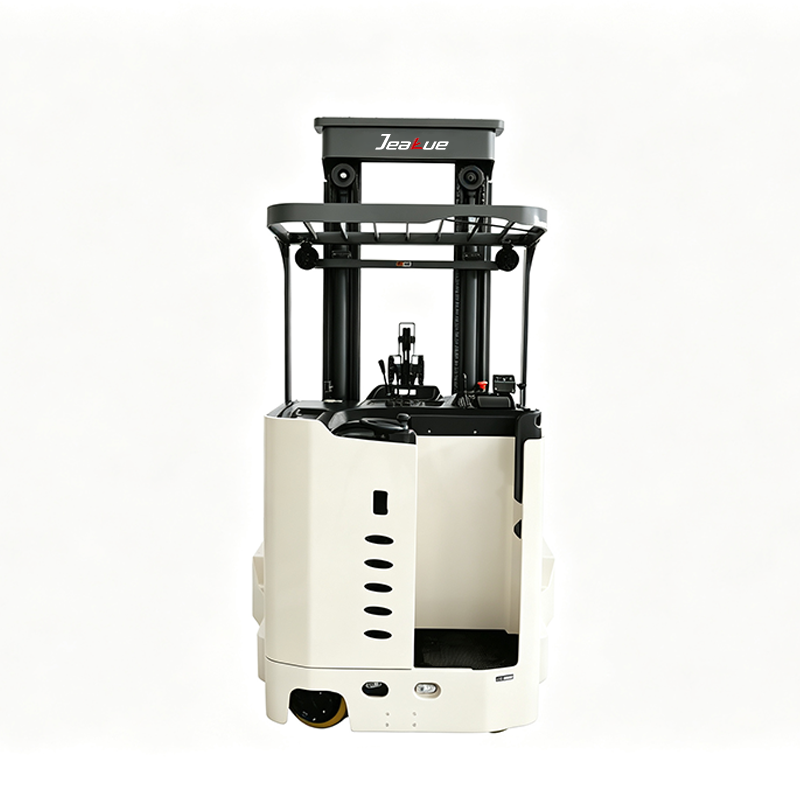
In the modern material handling industry, the three-wheel electric forklift stands out as a specialized solution for narrow aisle operations. When paired with a lead-acid battery, this combination offers a unique blend of maneuverability, cost-effectiveness, and proven reliability. This article explores the key characteristics, advantages, and maintenance requirements of lead-acid battery-powered three-wheel forklifts.
What Makes a Three-Wheel Forklift Unique?
The defining feature of a three-wheel forklift is its steering configuration. Unlike four-wheel models with a traditional rear axle, the three-wheel design employs a single, centrally mounted steer wheel beneath the counterweight . This configuration enables an exceptionally tight turning radius, often between 1.4 and 1.8 meters, allowing operation in aisle widths as narrow as 3.0 to 3.4 meters . For warehouses seeking to maximize storage density, this agility translates directly into more racking and higher space utilization.
Three-wheel forklifts are typically best suited for indoor applications with smooth, level surfaces. They excel in retail warehousing, distribution centers, and manufacturing environments where load weights do not exceed approximately 2,000 kilograms . While they offer comparable stability to four-wheel models on even surfaces, they are less suited to uneven terrain or heavy-duty outdoor applications .
Lead-Acid Batteries in Three-Wheel Forklifts
Lead-acid batteries remain the most common power source for electric forklifts, including three-wheel models. Several factors contribute to their continued dominance. First, they are the most cost-effective electric power solution available, requiring significantly lower upfront investment than lithium-ion alternatives . Second, lead-acid technology is well-established, with reliable performance characteristics and extensive service networks. Finally, lead-acid batteries are approximately 99 percent recyclable, with mature recycling infrastructure widely available .
Within the lead-acid category, forklifts typically use deep-cycle traction batteries designed for regular discharge and recharge cycles. These batteries feature thicker plates than automotive starting batteries, enabling them to withstand the demands of daily industrial use . The most common construction for forklift applications is the tubular-plate flooded design, which offers longer cycle life compared to flat-plate alternatives .
Operational Characteristics and Trade-offs
Choosing a lead-acid battery for a three-wheel forklift involves several practical considerations. A properly maintained lead-acid battery can provide up to eight hours of operation per shift and last approximately five years . However, this longevity depends heavily on disciplined maintenance practices.
Charging lead-acid batteries requires dedicated time and infrastructure. A full charge typically takes eight to twelve hours, followed by a cooling period before the battery can be returned to service . For multi-shift operations, this necessitates either spare batteries for swapping or scheduled downtime. Additionally, charging releases hydrogen and oxygen gases, requiring a designated, well-ventilated charging area with appropriate safety measures .
Cold environments pose another challenge. Lead-acid batteries lose capacity in low temperatures, making them less suitable for cold storage applications or winter outdoor use . For operations in temperature-controlled environments, this limitation may influence battery selection.
Maintenance: The Key to Longevity
Lead-acid batteries are not maintenance-free. Their performance and lifespan depend directly on consistent care. The most critical routine task is watering. During charging, water in the electrolyte evaporates, and if the plates become exposed to air, they oxidize and permanently lose capacity . Water should only be added after charging is complete and only using distilled or deionized water .
The “80 percent rule” is equally important for battery health. Lead-acid batteries should be recharged when they reach 20 to 30 percent discharge—that is, when 70 to 80 percent of capacity remains . Waiting until the battery is nearly empty causes overheating, accelerates wear on cells, and can damage the forklift’s electrical components . Deep discharges beyond this threshold should be avoided whenever possible.Terminal and surface cleaning also matters. Corrosion on terminals and connectors increases resistance, reducing efficiency and potentially causing unsafe conditions. A baking soda solution or commercial battery cleaner can neutralize acid residue, followed by thorough rinsing and drying . Regular visual inspections for cracks, leaks, or damaged cables should be part of every charging cycle .
Safety Considerations
Working with lead-acid batteries requires attention to several safety hazards. The electrolyte contains sulfuric acid, which can cause severe burns. Personal protective equipment—including gloves, eye protection, and protective clothing—should be worn whenever handling batteries . Metal jewelry should be removed to prevent short circuits.
Hydrogen gas produced during charging is flammable and explosive at concentrations as low as four percent . Charging areas must have adequate ventilation to keep hydrogen levels below one percent. Open flames, sparks, and smoking must be prohibited in battery charging and storage areas.
Batteries are also extremely heavy—often exceeding 1,000 kilograms—making manual handling dangerous. Proper lifting equipment and battery changing systems should be used, and employers should provide mechanical assistance whenever possible .
Conclusion
The lead-acid battery three-wheel forklift represents a practical, cost-effective solution for narrow-aisle material handling. The three-wheel design delivers exceptional maneuverability for space-constrained warehouses, while lead-acid technology provides reliable power at a lower upfront cost than alternative chemistries. However, this combination demands commitment to regular maintenance—particularly watering and proper charging practices—to achieve the expected five-year service life. For operations with predictable workloads, indoor environments, and the infrastructure to support charging and maintenance, the lead-acid three-wheel forklift remains a sound investment.