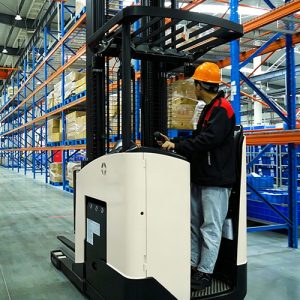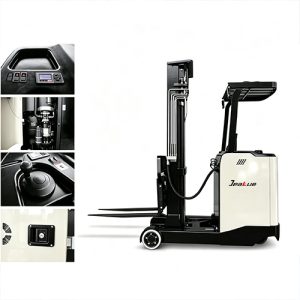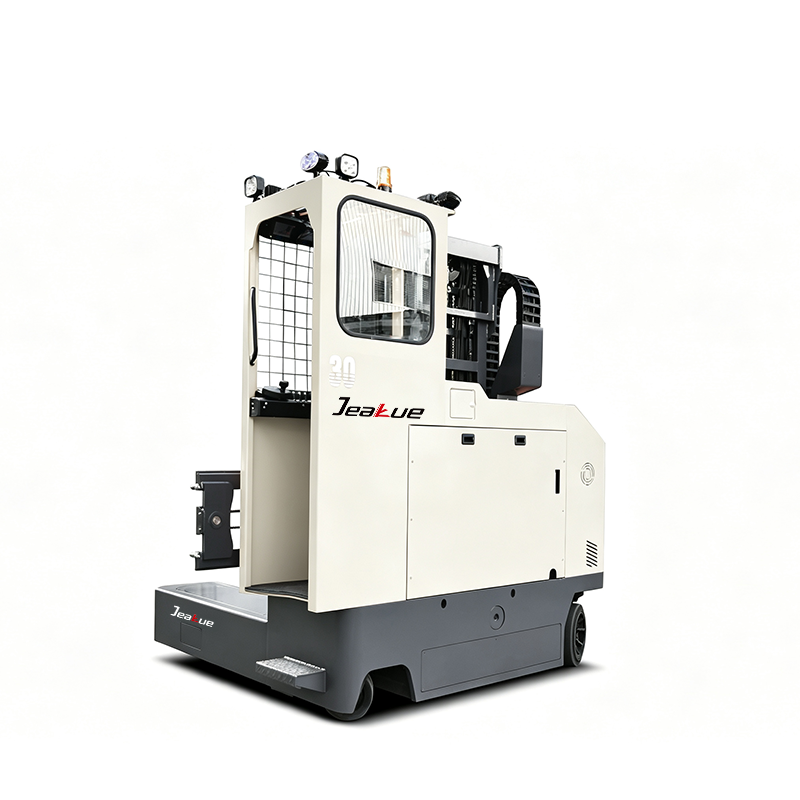
In the demanding world of industrial material handling, the engine is the heart of any forklift. When operations require consistent power, durability, and fuel efficiency, the ISUZU engine has long been the benchmark for diesel forklift performance. From small warehouses to massive port terminals, ISUZU-powered forklifts have earned a reputation for reliability that few can match.
A Legacy of Industrial Diesel Excellence
ISUZU has been manufacturing industrial diesel engines for decades, and its power plants have become ubiquitous in the forklift industry. The appeal lies in a simple proposition: engines that start reliably, run efficiently, and last for thousands of hours with minimal downtime. For fleet managers, this translates directly to lower total cost of ownership.
The C240 engine, a 2.37-liter four-cylinder unit, represents one of the most widely deployed ISUZU engines in the 2.5 to 3-ton forklift class. Producing approximately 35 kW (47.5 HP) at 2500 rpm and 137.7 Nm of torque at 1800 rpm, the C240 delivers the kind of low-end grunt that forklifts need for lifting heavy loads and climbing ramps under full capacity . Its simple, robust construction has made it a favorite in applications where reliability matters more than cutting-edge emissions technology.
For heavier applications, the 6BG1 engine takes center stage. This 6.5-liter six-cylinder workhorse powers forklifts in the 6 to 10-ton range and beyond. In the TCM 6-10 ton series, the 6BG1 provides high torque and smooth power delivery through an electronically controlled automatic transmission, allowing operators to navigate inclines and tight yard spaces with confidence . In larger configurations, such as the EP Equipment T8 series, the same engine delivers 82.3 kW while moving loads up to 10 tons across gravel and uneven ground at speeds up to 25 km/h .
The 4JG2 is another notable ISUZU engine found in rough terrain forklifts. Delivering 44.9 kW at 2450 rpm and 186.3 Nm of torque at 1600-1800 rpm, this four-cylinder naturally aspirated engine is specifically selected for high-dust environments, where its dual-stage air filtration and steady torque characteristics shine .
Why ISUZU Engines Dominate Diesel Forklifts
Several factors explain the enduring popularity of ISUZU power plants in forklift applications.
Durability under continuous load. Forklifts operate in cycles—lift, travel, lower, repeat—often for entire shifts. ISUZU engines are designed for this kind of relentless duty cycle, with robust internals and conservative power ratings that prioritize longevity over peak output.
Fuel efficiency. Diesel forklifts are expected to run long hours, and fuel costs accumulate quickly. ISUZU’s direct injection and efficient combustion design help operators control fuel expenses without sacrificing power. The C240, for instance, sips from a modest 70-liter tank while delivering full-day productivity .
Ease of maintenance. Wide-access engine covers and well-documented service procedures mean routine maintenance can be performed quickly. ISUZU’s industrial engines have extensive service documentation available, including detailed manuals covering everything from valve clearance specifications (0.40 mm cold) to fuel injection timing (6 degrees BTDC) . This documentation ecosystem reduces downtime when repairs are needed.
Parts availability. Because ISUZU engines are so widely used across forklift brands, automotive applications, and stationary equipment, replacement parts are readily available through multiple channels. This competitive supply chain keeps parts costs reasonable and minimizes the time a forklift spends waiting for components.
Applications Across the Capacity Spectrum
ISUZU engines power forklifts across virtually every capacity class used in industrial settings.
In the 3-ton class, the C240 engine is the standard choice for warehouses, manufacturing plants, and distribution centers. Forklifts such as the FD30 with ISUZU C240 power deliver 3,000 kg of lifting capacity with travel speeds up to 19 km/h and lift speeds of 460 mm/s under full load . These machines handle the daily grind of pallet movement, truck loading, and racking operations.
For 4.5 to 5-ton applications, the ISUZU 6BG1 becomes the power source. A representative model offers 4,500 kg capacity with a 5,000 mm lift height, powered by an 85 kW version of the 6BG1 . These forklifts bridge the gap between standard warehouse trucks and heavy-capacity machines.
In the 7 to 10-ton range, the 6BG1 continues to prove its worth. The UN FD70T-NJB3, for example, couples a 110.5 HP ISUZU 6BG1 engine with a 7,000 kg lift capacity and a duplex mast reaching 3 meters . These machines are built for concrete plants, timber yards, and port terminals where loads are heavy and terrain is uneven.
For rough terrain and outdoor operations, ISUZU’s 4JG2 engine in Bundu forklifts demonstrates how the right power plant can transform a vehicle’s capabilities. The combination of ISUZU reliability with a limited-slip differential allows these 3 to 3.5-ton forklifts to work effectively on gravel, grass, and muddy surfaces where conventional forklifts would struggle .
Built for the Realities of Industrial Work
The ISUZU engine’s reputation in forklifts is not built on marketing but on the accumulated experience of operators, fleet managers, and mechanics. These engines have powered forklifts through years of dusty warehouses, freezing cold docks, and sweltering foundries. They have proven that reliability is not about complexity—it is about doing simple things extraordinarily well, year after year.
When a material handling operation needs a forklift that will start every morning, lift every load, and keep running shift after shift, the ISUZU diesel engine remains a choice that experienced buyers return to again and again.