In industries where timber, steel pipes, aluminum profiles, or precast concrete dominate the material flow, standard counterbalance forklifts often reach their operational limits. The challenge is not merely weight; it is geometry. Long loads require wide aisles for conventional trucks to turn, consuming valuable warehouse real estate and increasing the risk of product damage during transport. This is where the custom side loader forklift emerges not just as an alternative, but as a precision-engineered solution tailored to the specific constraints of a facility.
Why Customization Matters in Side Loading
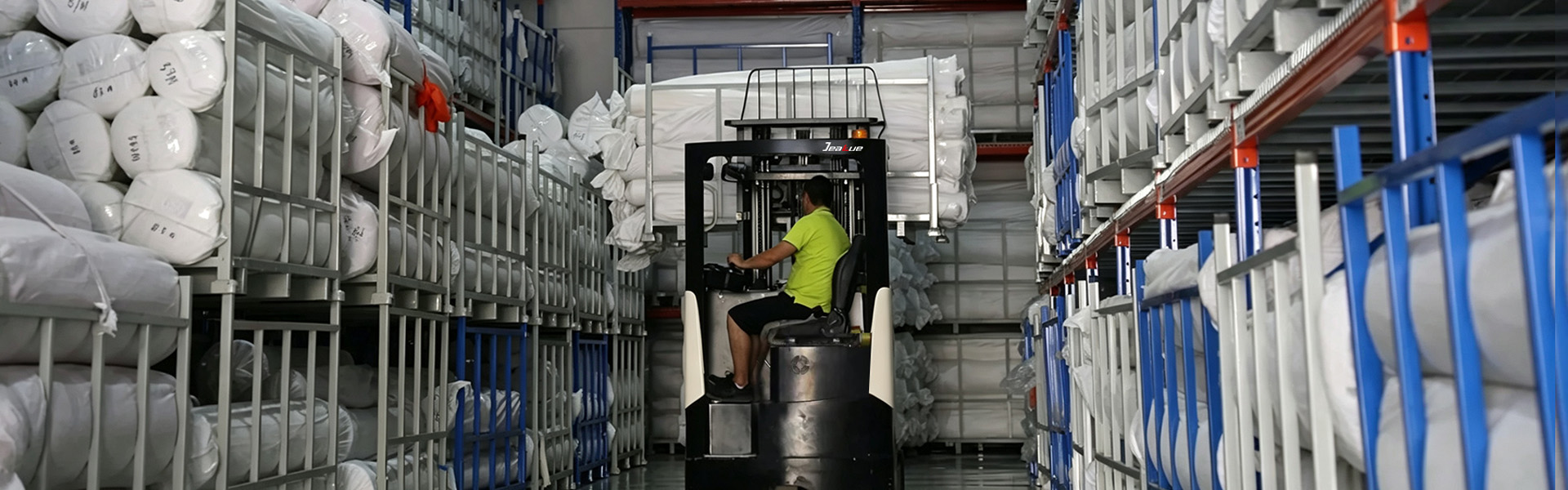
A side loader differs fundamentally from a front-loading forklift. Its forks are mounted on the side of the chassis, allowing the operator to pick up and transport long goods parallel to the aisle. This design eliminates the need for the wide turning radius that conventional forklifts require, significantly increasing storage density . However, the true value of a side loader is unlocked when it is customized to the exact dimensions and weights of the goods being handled.
Off-the-shelf equipment often forces a compromise—either the load capacity is excessive, leading to unnecessary energy consumption, or the platform dimensions are insufficient, creating safety hazards. Manufacturers like HUBTEX and BULMOR specialize in building vehicles based on modular systems, where the chassis, mast, and load handling attachments are configured to the customer’s specific load spectrum . For a dealer in building materials or a steel service center, this means a side loader can be delivered with a platform length precisely matched to standard stock sizes, reducing the footprint of the machine while maintaining stability.
Engineering for Stability and Visibility
The primary technical challenge in side loader design is counteracting the lateral forces exerted by a load carried outside the chassis’s centerline. When a heavy load is lifted several meters into the air on a side-mounted mast, the center of gravity shifts dramatically. Custom engineering addresses this through reinforced chassis construction and advanced stability control systems.
HUBTEX, for instance, integrates patented assistance systems such as the Clear Aisle Assist, which helps prevent collisions with protruding loads in narrow aisles—a common risk when navigating with long goods . Furthermore, the operator’s perspective is critical. Custom side loaders often feature elevated or adjustable operator platforms that provide an unobstructed view of both the load and the racking, reducing the likelihood of damage to high-value materials like aluminum extrusions or finished timber .
Multi-Directional Capability as a Custom Standard
While basic side loaders move forwards and backwards with side-loading capability, many custom solutions now incorporate multi-directional steering. This allows the vehicle to travel sideways, diagonally, or rotate on its own axis. For a manufacturer dealing with both long profiles and standard pallets, a multi-directional sideloader acts as a versatile workhorse, eliminating the need for a separate front-loading truck.
BULMOR’s four-way sideloaders, developed from the heritage of brands like JUMBO and IRION, exemplify this trend. They are built to order with lifting capacities ranging from 2 to 20 tonnes, ensuring that a foundry handling heavy dies and a window fabricator handling PVC profiles can both find a configuration that fits . The customization extends to the power source as well—electric models are preferred for indoor warehouses where emissions are a concern, while diesel or LPG units are specified for outdoor yards handling raw steel or lumber .
Sector-Specific Configurations
The requirement for a custom side loader varies drastically by industry. In the aerospace sector, HUBTEX North America has developed specialized tool changers and multi-directional platforms for moving injection molds and aircraft components. These are not standard forklifts; they are precision handling systems designed to interface with specific assembly jigs and maintain strict orientation during transport .
In the aluminum and glazing industries, the emphasis is on surface protection. Custom side loaders are fitted with non-marking tires, specialized fork coatings, and hydraulic systems that ensure smooth, jerk-free lowering to prevent scratching or bending of soft metal profiles . Similarly, for the precast concrete industry, the customization involves extreme duty cycles and enhanced filtration systems to cope with abrasive dust, alongside platforms designed to handle the irregular shapes of concrete elements.
The Economic Argument for Customization
While the upfront cost of a custom side loader exceeds that of a standard forklift, the total cost of ownership tells a different story. By reducing aisle widths, a facility can reclaim up to 50% of its storage space for additional racking or production lines . Furthermore, the reduced risk of product damage—particularly in high-value sectors like aerospace or specialty metals—often justifies the investment within a short operational window. Manufacturers like Combilift offer warehouse planning services alongside their custom builds, ensuring that the vehicle specification aligns with the racking layout and future growth plans .
Conclusion
A custom side loader forklift is more than a modified truck; it is a logistical tool engineered around a specific material flow problem. Whether the challenge is a 20-meter aluminum extrusion that must be retrieved from a cantilever rack without deflection, or a heavy mold that requires precise positioning in a press, the solution lies in the details of the build. From the reinforcement of the mast to the programming of the steering controller, customization ensures that the equipment delivers safety, efficiency, and longevity in the exact environment it was designed to serve. As supply chains continue to demand higher density and faster turnaround, the role of the tailored side loader will only grow in prominence.