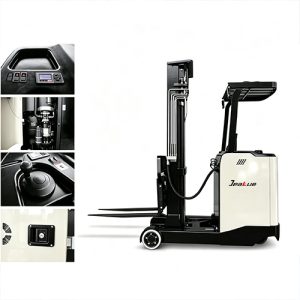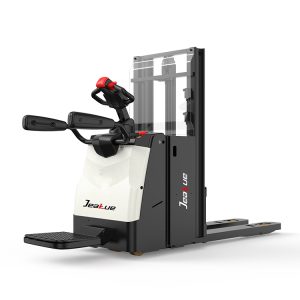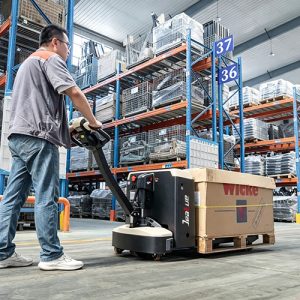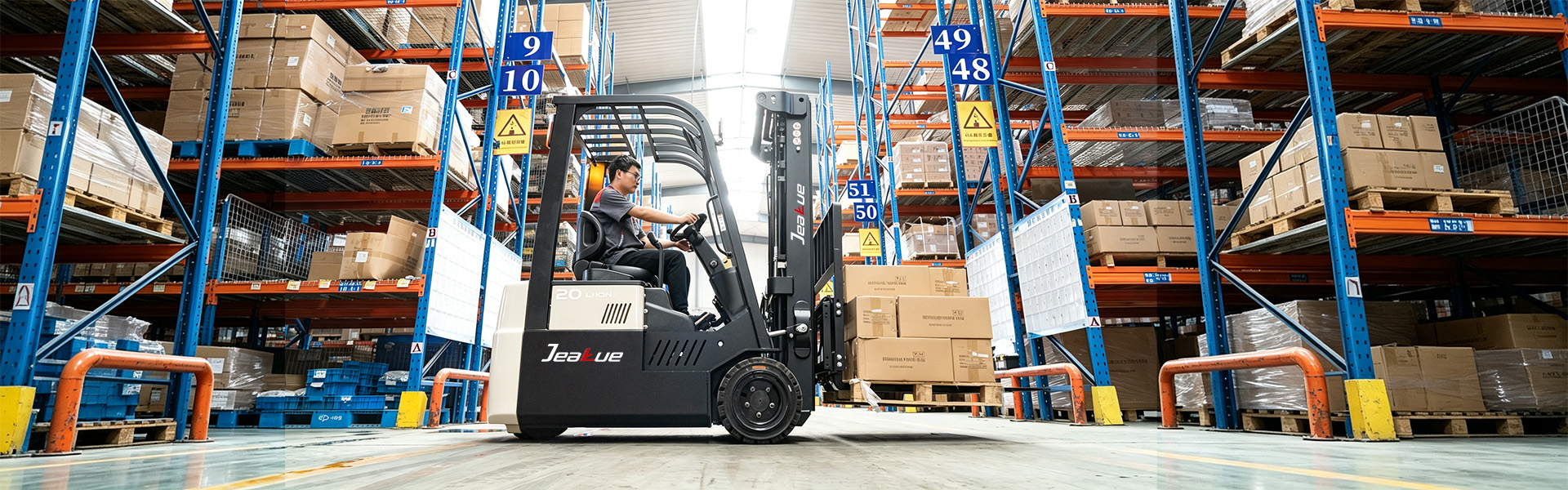
In the modern warehouse, efficiency is not just about moving heavy loads—it is about moving them quickly, safely, and within increasingly confined spaces. This is where the compact three wheel forklift has carved out a vital niche. Unlike its larger four-wheel counterparts, this specialized material handling equipment is engineered for agility, making it an indispensable asset in industries ranging from food and beverage to electronics and logistics.
The defining feature of a compact three wheel forklift is its unique configuration: a single steer wheel at the rear and two load-bearing wheels at the front. This design offers a significant advantage in maneuverability. The rear wheel provides a tighter turning radius, allowing the forklift to pivot almost on its own axis. In narrow aisles, crowded loading docks, or cluttered storage rooms, this translates to faster cycle times and reduced risk of product damage. Operators can navigate tight corners and position pallets with surgical precision, tasks that would be cumbersome for a standard four-wheel lift.
Beyond agility, these forklifts are celebrated for their compact footprint. They are typically electric-powered, using lead-acid or lithium-ion batteries, which makes them ideal for indoor applications where emissions and noise are concerns. Their smaller size does not mean a sacrifice in performance; many models can lift loads ranging from 1,500 to 4,000 pounds (approximately 680 to 1,800 kg), sufficient for most warehouse and retail tasks. The lower center of gravity, achieved through the battery placement, also contributes to stability, though operators must remain mindful that the three-wheel design can be less stable on uneven surfaces or when handling off-center loads.
Safety remains paramount. Modern compact three wheel forklifts come equipped with features such as regenerative braking, automatic parking brakes, and ergonomic controls that reduce operator fatigue. Training is critical, as the unique steering dynamics require a different skillset compared to four-wheel models. However, once mastered, the three-wheel forklift becomes an extension of the operator, boosting productivity in ways that larger machines cannot.
In conclusion, the compact three wheel forklift is a testament to engineering tailored for the real world. It excels where space is at a premium and precision is non-negotiable. For businesses looking to optimize their material handling in tight quarters, this agile workhorse is not just an option—it is often the smartest choice. As warehouses continue to evolve toward higher density and faster turnaround, the demand for such compact, efficient solutions will only grow.