The Journey of One of the UK’s First FBL181 Lithium Forklifts
From First to Second Life: The Journey of One of the UK’s First FBL181 Lithium Forklifts
In 2020, lithium-powered counterbalance forklifts were still a relatively new concept for many businesses across the UK. Diesel and LPG trucks had long dominated material handling operations, and the idea that an electric forklift could match their versatility -especially in outdoor applications – was met with a fair amount of skepticism.
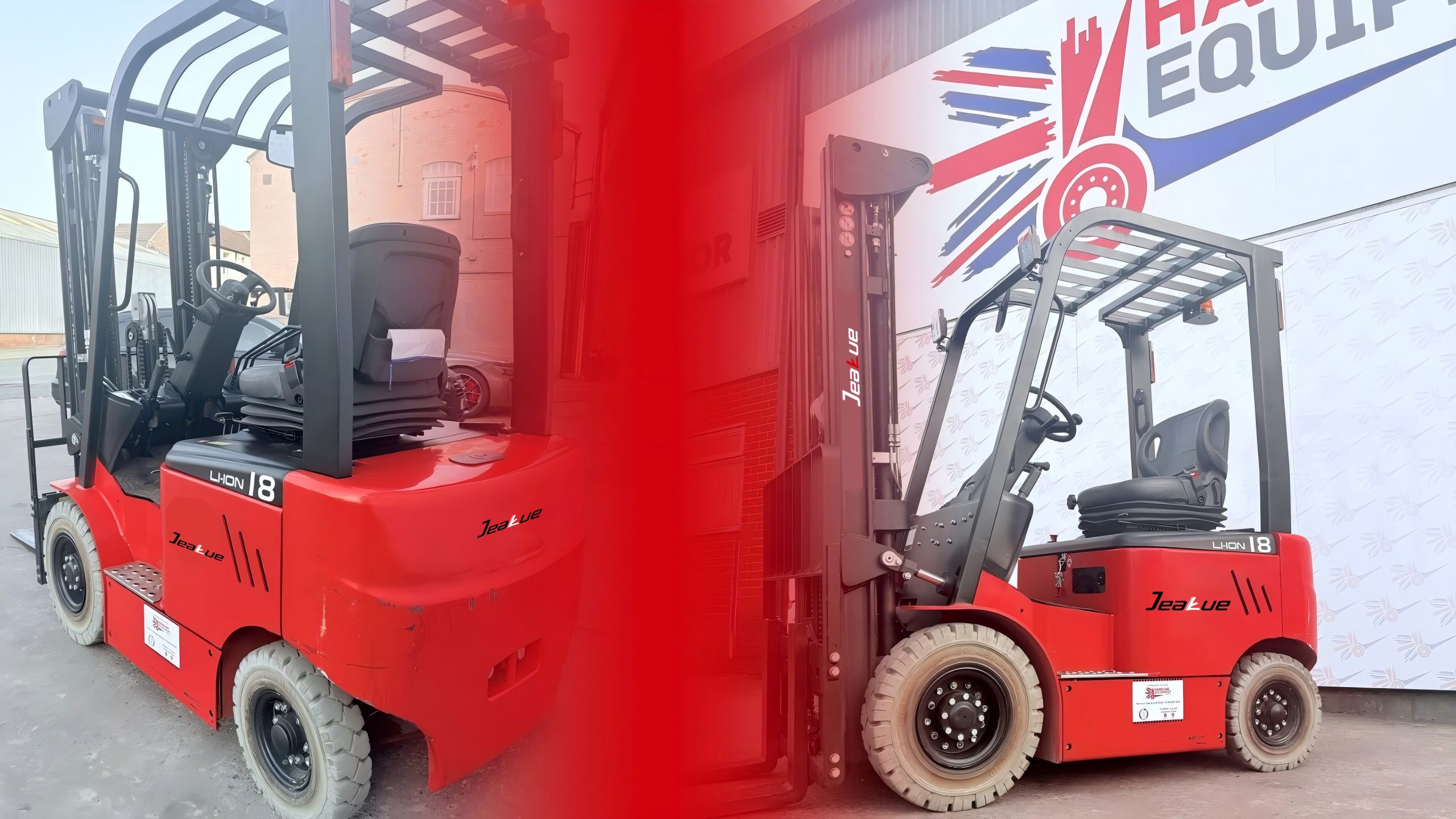
It was during this period that one of the first JEAKUE FBL181 forklifts entered the UK market, supplied by Handling Equipment UK to a medical supply company. What began as a practical replacement for an LPG truck soon became an early example of how lithium technology could reshape expectations around forklift performance, cost, and reliability.
Five years later, that same truck has proven its value and is now beginning a second life with a new operator, while its original customer continues the electrification journey with a new JK FBL201.
A Practical Need for a Versatile Forklift
The story began with a straightforward operational requirement. The medical supply company needed a forklift capable of handling both outdoor unloading and indoor warehouse operations. Their existing LPG truck had served its purpose, but the business was looking for a more efficient solution that could deliver lower operating costs without compromising on performance.
The FBL181 provided exactly that balance.
With its lithium battery technology and robust design inspired by internal combustion trucks, the forklift offered the flexibility needed for mixed indoor and outdoor environments while significantly reducing running costs.
For Handling Equipment UK, the economic case was clear from the beginning.
“It was very easy to demonstrate that the FBL181 would cost less overall and be cheaper to run than the LPG truck it was replacing,” explains Andy Williams.
That combination of operational flexibility and lower total cost of ownership made the decision straightforward for the customer.
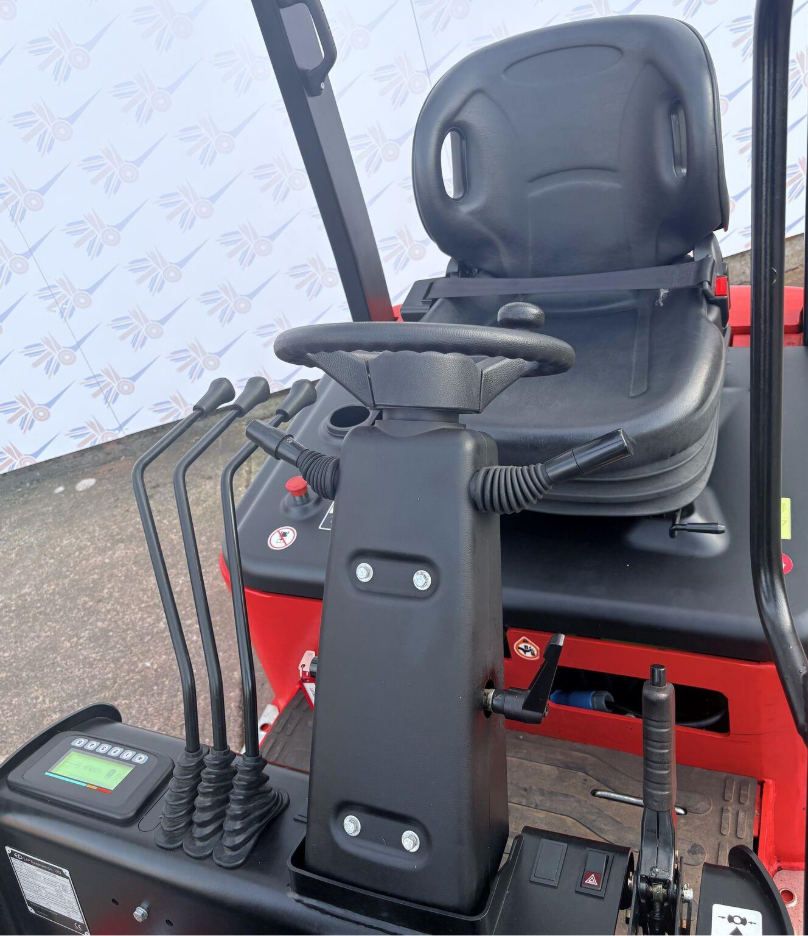
Proving Reliability in Real Operations
While lithium forklifts promised clear advantages, many businesses at the time were still unsure whether they could truly match the durability and dependability of traditional combustion trucks.
Over the past five years, this particular FBL181 has helped demonstrate exactly that.
Delivered in January 2021, the truck has operated without a single breakdown – “From the delivery date in January 2021, the performance has been completely faultless,” says Andy Williams.
This reliability became an important proof point, showing that lithium-powered forklifts were not only viable alternatives to LPG and diesel machines, but could also deliver consistent, dependable performance over time.
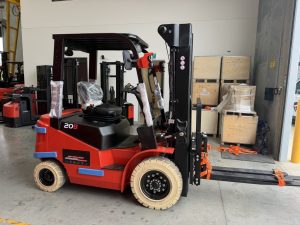
The positive experience ultimately led the customer to continue investing in JEAKUE. When the time came to update their fleet, they chose to move forward with the new FBL201, reinforcing their confidence in lithium technology.
Overcoming Early Skepticism
Back in 2020, lithium-powered counterbalance forklifts were still unfamiliar territory for many businesses. Customers were curious but cautious, often questioning whether the technology could live up to its promises.
Handling Equipment UK addressed this hesitation directly: “We always guaranteed that if the truck didn’t live up to expectations, we would replace it,” Andy Williams explains. “But we’ve never had to do that.”
Initial reactions were often skeptical. Many customers found it difficult to believe that a lithium forklift could truly replace an LPG or diesel truck in demanding applications.
“Nobody believed it initially,” Williams recalls. “But the proof became apparent very quickly.”
Once businesses saw the performance, ease of operation, and cost advantages firsthand, attitudes began to change.
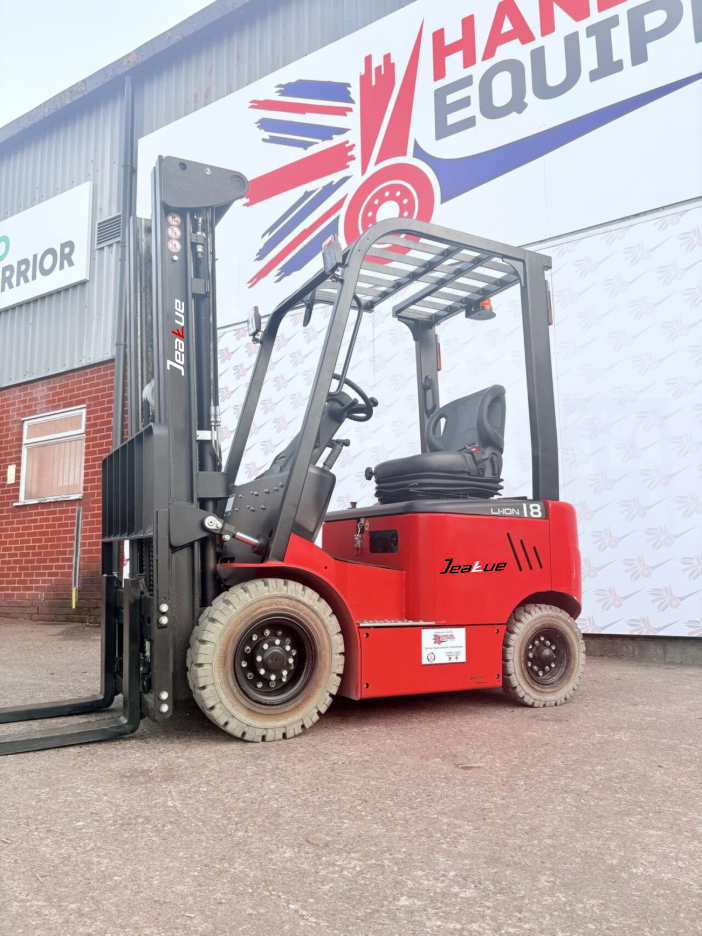
Lithium Becomes the New Standard
Since those early days, the market has evolved dramatically. Lithium forklifts have moved from being an experimental alternative to becoming a mainstream solution for many applications.
According to Handling Equipment UK, the shift has been remarkable.
“From our perspective, around 95% of our counterbalance sales and hire are now JK lithium trucks.”
Even within the broader industry, attitudes have changed. Dealers and competitors who were initially critical of lithium technology eventually began recognizing its advantages and adopting similar solutions.
As electrification gained momentum across many sectors, businesses also became more confident in adopting lithium-powered equipment.
Today, lithium forklifts are widely recognized as a practical replacement for internal combustion trucks in a growing number of applications.
The Next Generation of Lithium Forklifts
While the FBL181 helped introduce lithium counterbalance trucks to the UK market, JEAKUE has continued to refine and improve its product range.
The FBL183 represents the next generation of this concept. Built on an 80V platform, the truck features a more compact chassis and enhanced performance while maintaining the same core advantages that made the original FBL series successful.
Handling Equipment UK has been a major supporter of the FBL range, supplying at least 125 FBL181 units to customers over the years.
“We were actually a bit sad when we were advised to move away from the FBL181,” Andy Williams admits. “But we have very high hopes for the FBL183 with its new 80V platform, compact chassis, and added value.”
The new generation trucks are already proving to be effective replacements for 1800 kg gas forklifts, helping businesses transition even further away from internal combustion equipment.
A Second Life for the FBL181
Another advantage of lithium-powered forklifts is their ability to remain valuable well beyond their initial deployment.
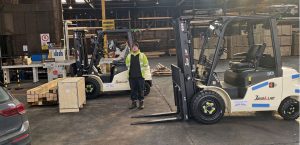
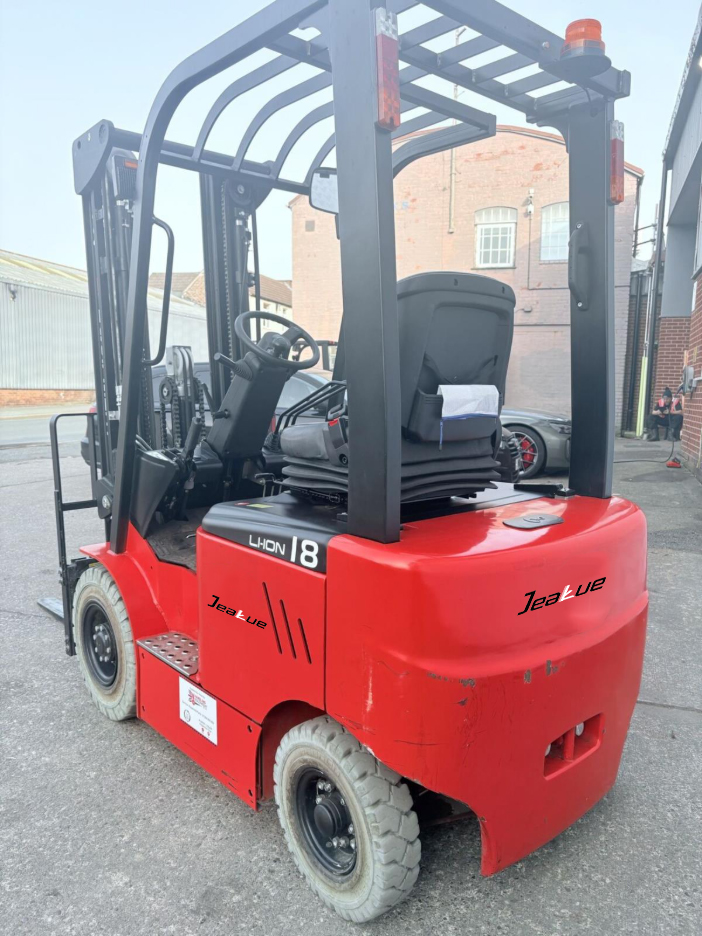
After five years with its original owner, the FBL181 is now moving to a wholesale supplier of coffee and cake, where it will continue operating in a new environment.
This second-life potential adds another dimension to the sustainability and economic value of lithium forklifts.
“Every time we replace an internal combustion truck, it’s a win for the environment and for running costs,” Andy Williams explains.
By extending the lifecycle of the equipment while replacing combustion-powered machines, businesses can reduce both emissions and operational expenses.
A Transformational Shift in the Industry
Looking back at the past few years, the impact of lithium forklifts on the UK market has been substantial.
Today, lithium-powered forklifts are capable of serving nearly every application traditionally handled by internal combustion trucks. As businesses continue to prioritize efficiency, sustainability, and ease of operation, lithium technology is becoming the natural choice for modern material handling.
The journey of this early FBL181 illustrates that transformation perfectly – from one of the first lithium forklifts introduced to the UK market to a machine that has proven its reliability, supported the shift toward electrification, and is now beginning a new chapter in its second life.